Flatbed Trailer vs. Gooseneck Trailer: Which One Is Right for You?
Choosing the right trailer for your hauling needs can make all the difference — learn the key differences between flatbed and gooseneck trailers so you can decide which one is best for your project.
February 11, 2026
When it comes to hauling equipment, vehicles, or materials, choosing the right trailer for the job is essential. Two popular options are flatbed trailers and gooseneck trailers, both of which have distinct advantages based on the type of load you're carrying and how far you're transporting it. Understanding the key differences between these two types of trailers will help you make an informed decision about which one best suits your needs.
Let’s break down the benefits and ideal use cases of each type of trailer to help you determine which one fits your requirements.
What is a Flatbed Trailer?
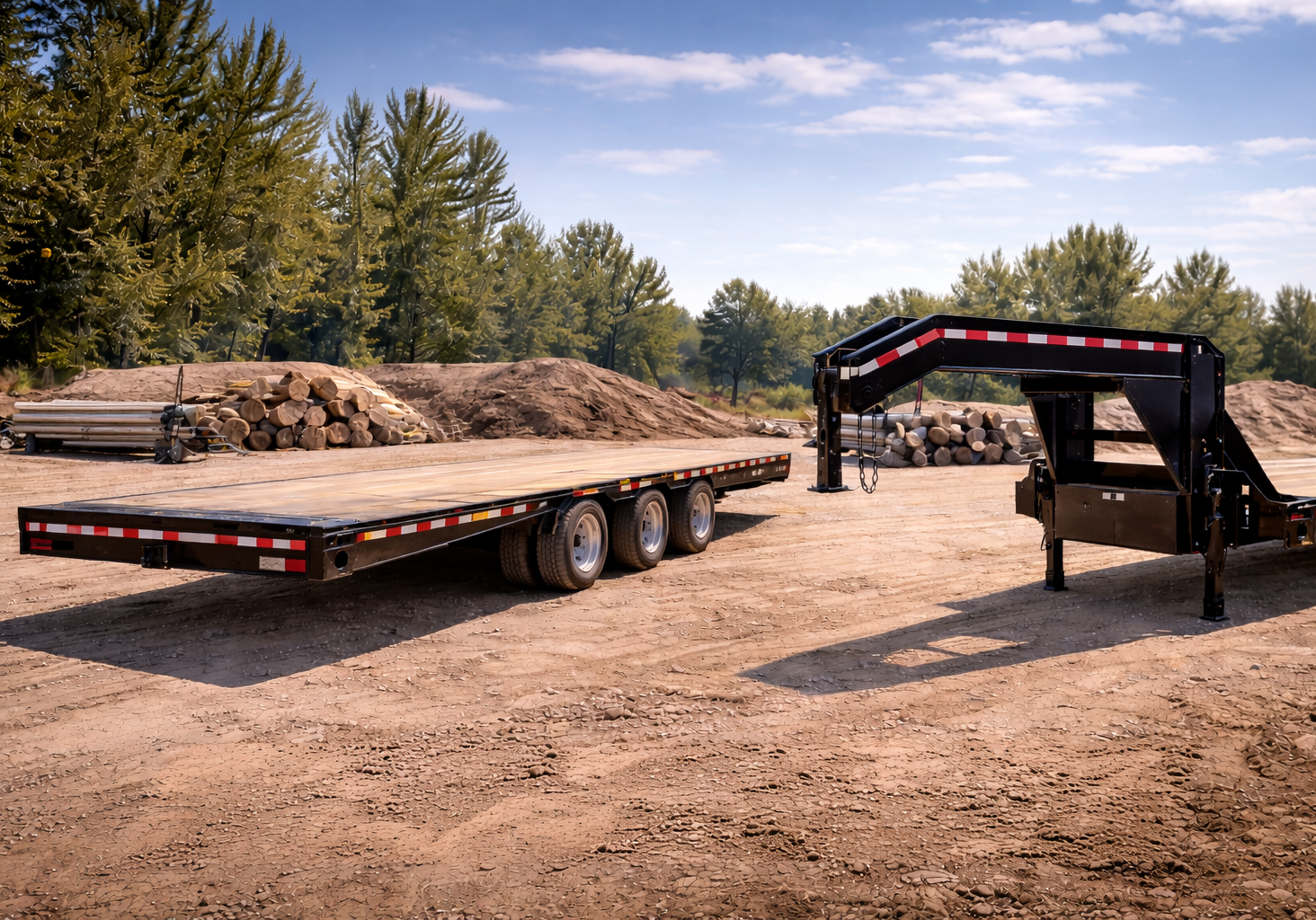
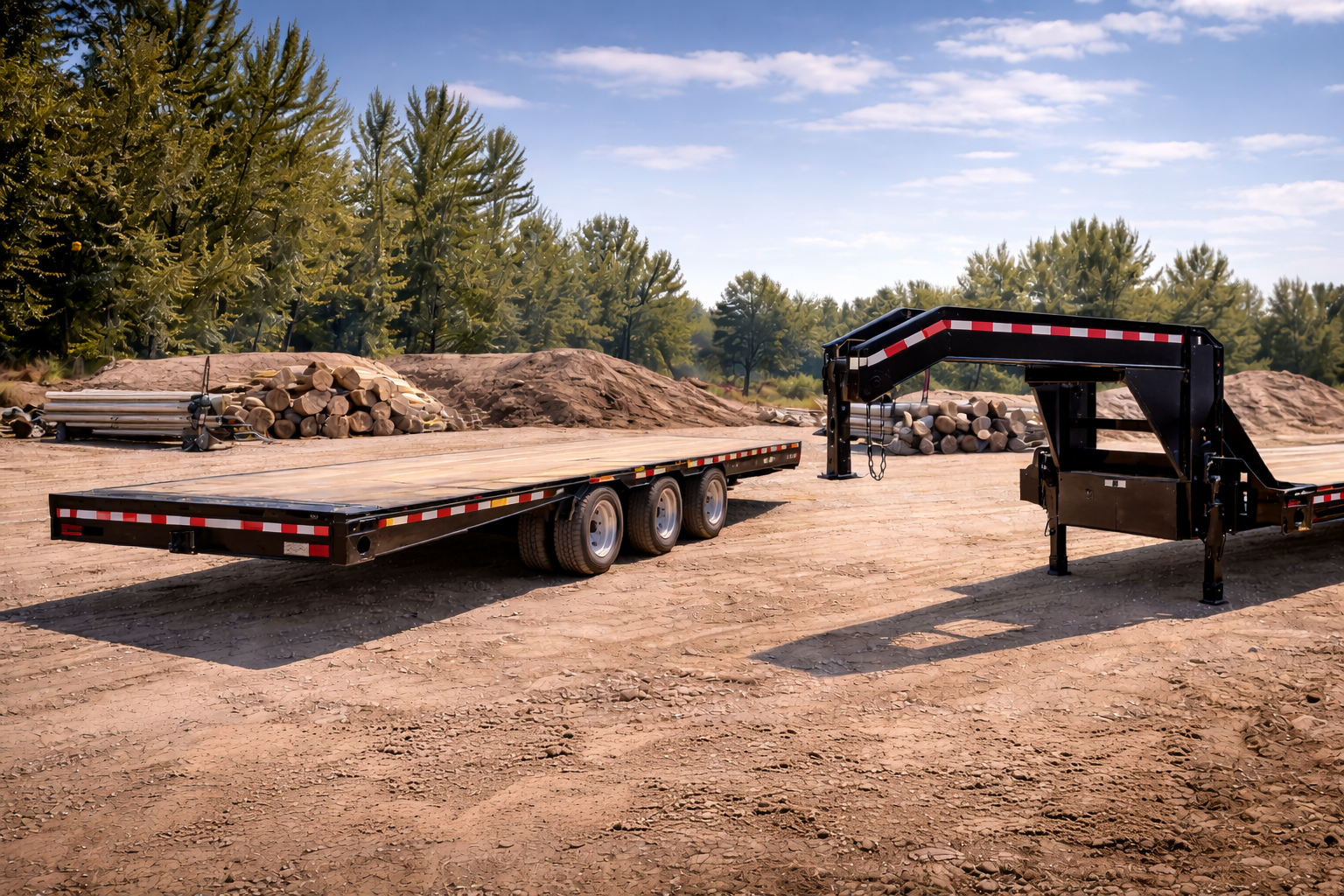
Flatbed trailers are the most basic type of trailer, offering a level, open deck with no sides or roof. They are designed for general hauling tasks, providing a versatile platform for moving goods, construction materials, and vehicles. Flatbed trailers are equipped with tandem axles or dual wheels, offering solid support and stability.
Advantages of Flatbed Trailers:
- Ease of Loading and Unloading
- The flat, open deck allows for easy loading and unloading of various items. Flatbed trailers are particularly useful for hauling construction materials, machinery, and even vehicles because they allow you to load items from the side or rear.
- Wide Range of Uses
- Flatbed trailers are ideal for hauling vehicles, equipment, and construction materials. If your load doesn’t require specialized weight distribution, a flatbed trailer is a great option for moving both light and medium-weight items.
- Cost-Effective
- Due to their simpler design and lower maintenance requirements, flatbed trailers are often more affordable than gooseneck trailers, making them a budget-friendly option for hauling everyday loads.
- Versatility
- They can be used for a variety of jobs and work well in urban environments where tight spaces or limited access might make it difficult to maneuver a gooseneck trailer.
Best For:
- Transporting light to medium-weight cargo, vehicles, or general equipment.
- Moving lumber, building materials, and machinery.
- Short to medium hauls without the need for heavy-duty towing capacity.
What is a Gooseneck Trailer?
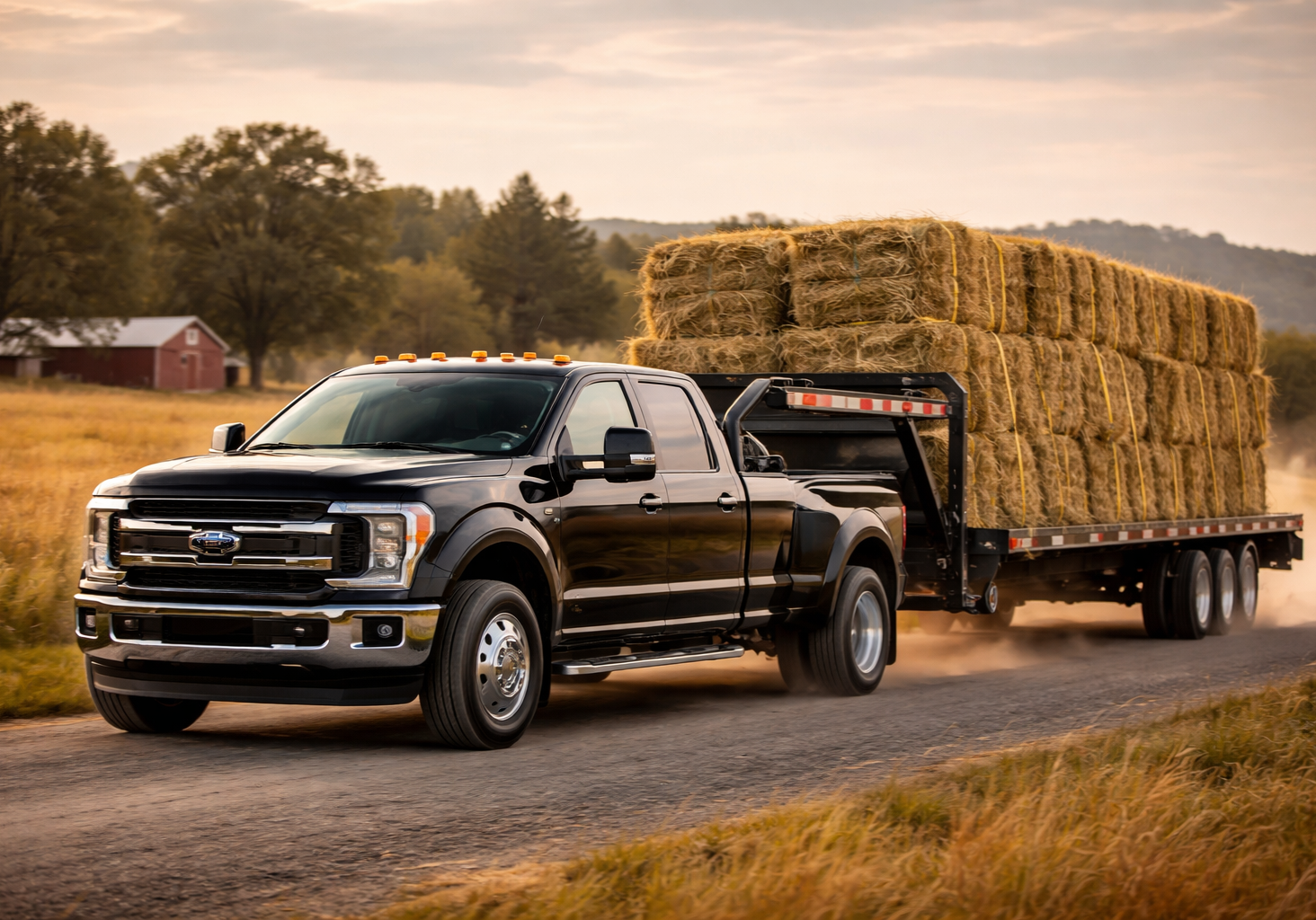
A gooseneck trailer is characterized by its distinctive hitch that connects to the truck bed. This trailer provides better weight distribution than a flatbed trailer, making it ideal for heavier loads. The gooseneck hitch is attached to the truck’s rear axle, allowing for more stability when towing.
Advantages of Gooseneck Trailers:
- Better Weight Distribution
- The gooseneck hitch connects to the truck bed, which distributes the weight of the load across both the truck and trailer. This makes gooseneck trailers ideal for heavier equipment or materials that need more even weight distribution.
- Increased Towing Capacity
- Gooseneck trailers generally have higher towing capacity, allowing them to haul larger and heavier loads than flatbed trailers. This makes them perfect for construction machinery, heavy-duty equipment, and large vehicles.
- Enhanced Stability
- The gooseneck connection is located over the truck’s rear axle, which reduces sway and offers better road stability, especially for heavier loads. This makes gooseneck trailers safer for towing large, cumbersome items over long distances.
- Ideal for Long Hauls
- Because of their ability to handle heavier loads and distribute weight effectively, gooseneck trailers are well-suited for long-distance transport of oversized or heavy loads.
Best For:
- Hauling heavy-duty equipment like excavators, tractors, and construction machinery.
- Long-distance transport of oversized loads.
- Maximizing towing capacity and load stability during transport.
Flatbed Trailers vs. Gooseneck Trailers: Key Differences
| Feature | Flatbed Trailer | Gooseneck Trailer |
|---|---|---|
| Load Type | Ideal for medium-weight cargo, vehicles, and equipment. | Best for heavy-duty equipment, construction machinery, and large loads. |
| Ease of Loading/Unloading | Easy loading from any side or rear. | More difficult to load due to height but better for heavy equipment. |
| Stability | Basic stability, can experience sway with heavy loads. | Superior stability, reduces sway due to the hitch position. |
| Towing Capacity | Lower towing capacity compared to goosenecks. | Higher towing capacity, great for heavy hauls. |
| Cost | Less expensive than gooseneck trailers. | More expensive due to additional design and towing capacity. |
| Ideal For | General use, short to medium hauls, light to medium cargo. | Long-distance hauling of heavier loads and specialized equipment. |
When Should You Choose a Flatbed Trailer?
- Short to medium hauls for vehicles, machinery, and construction materials.
- When loading and unloading is a priority, especially in tight spaces.
- If you’re looking for a cost-effective solution for hauling lighter to medium-weight loads.
When Should You Choose a Gooseneck Trailer?
- Long-distance hauling of heavy-duty equipment, machinery, and large vehicles.
- When you need to distribute the weight more evenly for safer towing.
- If you need a higher towing capacity to haul large or heavy loads.
Conclusion: Flatbed Trailers vs. Gooseneck Trailers
Choosing between a flatbed trailer and a gooseneck trailer comes down to your specific hauling needs. Flatbed trailers are versatile, cost-effective, and great for general use, while gooseneck trailers excel at handling heavier loads with greater stability and towing capacity, especially over long distances.
No matter which type of trailer you choose, both offer exceptional reliability and durability for getting the job done.
Haul on over to these posts
Trailer Maintenance: How Do I Keep My Trailer in Good Shape?
Discover essential trailer maintenance tips to keep your equipment in top shape. From regular inspections to tire care, ensure your trailer is ready for any job.